京都・東山「ウェスティン都ホテル」内の和装・洋装ブライダル撮影、前撮り・フォトウェディングサロン

2026.10.14
Japanese Wedding Traditions Kimono: Styles and Meanings in Kyoto
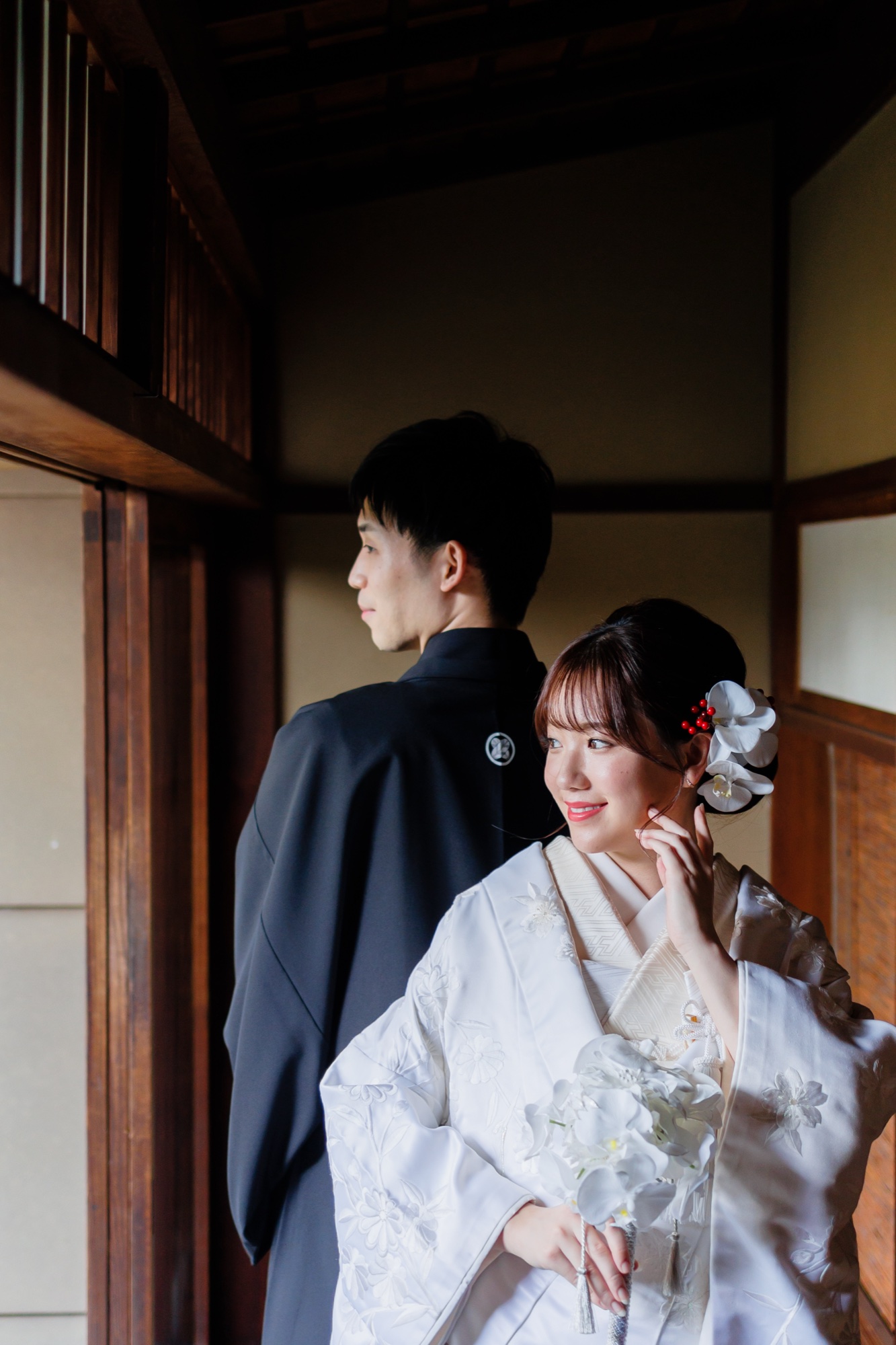
This guide is for couples from abroad who are planning a trip to Kyoto and are curious about traditional Japanese wedding kimono. You will learn what the main bridal and groom styles mean, how they are worn, and how you can wear them for wedding photos during your stay with Pure, a bridal salon inside The Westin Miyako Kyoto in Higashiyama.
Quick answer
- Traditional Japanese wedding attire is usually the bride’s all-white shiromuku or a colorful iro-uchikake (or a long-sleeved hiki-furisode), and the groom’s black montsuki with hakama.
- At Pure, every kimono plan includes dressing for both of you, one bridal kimono (shiromuku, iro-uchikake or hiki-furisode), the groom’s black montsuki, bridal hair and makeup, and accessories.
- The Kimono Studio Plan is ¥121,000 (tax included) for 150+ photos in about 3 hours at Pure’s Nijo Castle Studio.
- Location plans in Kyoto start at ¥154,000 (tax included) for 150+ photos in about 5 hours. Costs may differ depending on the location, and weekends and Japanese national holidays add ¥33,000 (tax included).
- You can plan from abroad: send an inquiry through the English contact form or book an online consultation.
What are the traditional Japanese wedding kimono styles?
A traditional Japanese wedding, often held at a Shinto shrine, has its own dress code. Each piece of clothing carries meaning, and many Japanese couples still choose kimono for their wedding photos even when they wear a dress at the reception. Here are the styles you will see most often.
| Style | Who wears it | What it is | What it is often said to mean |
|---|---|---|---|
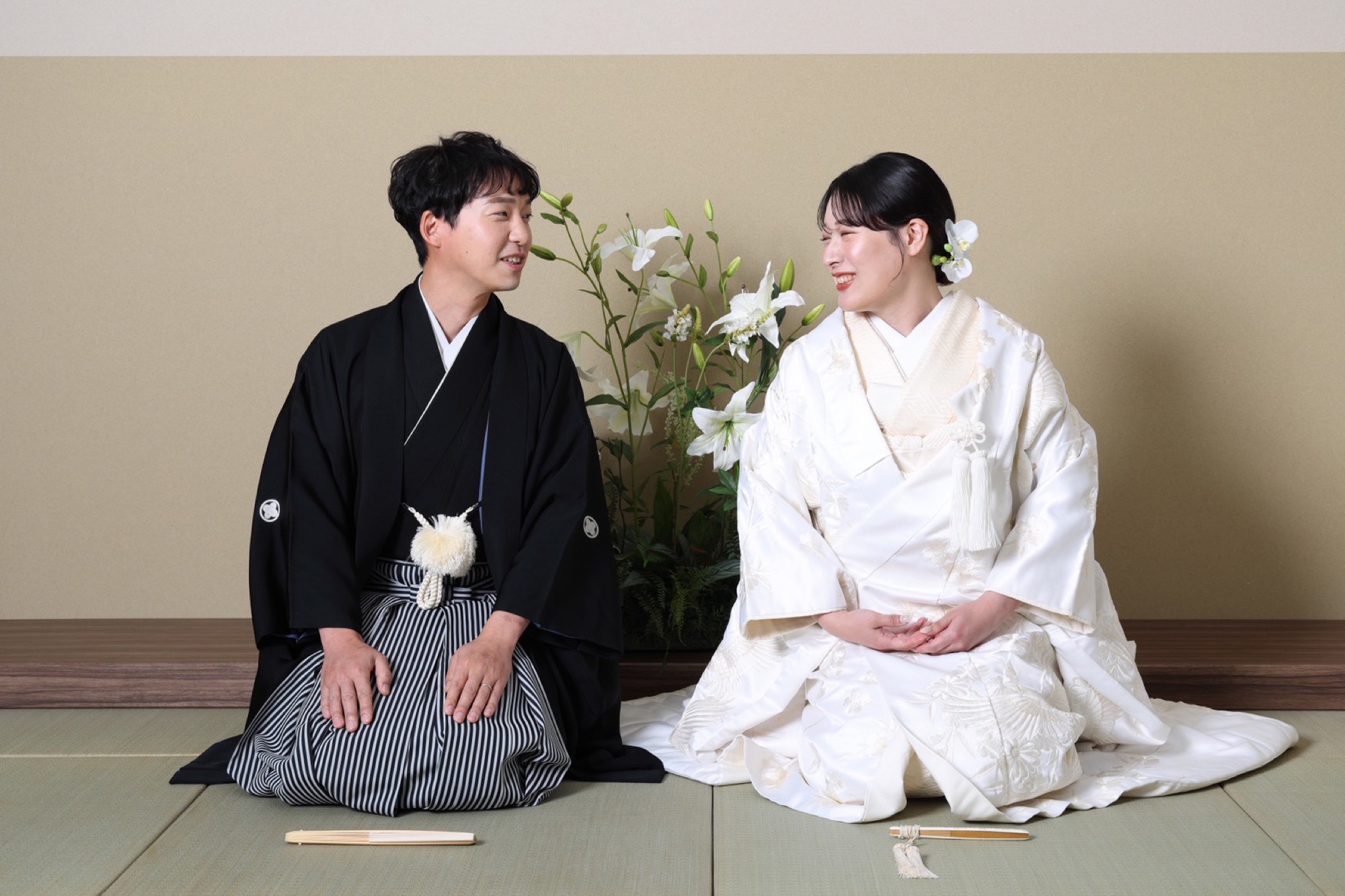
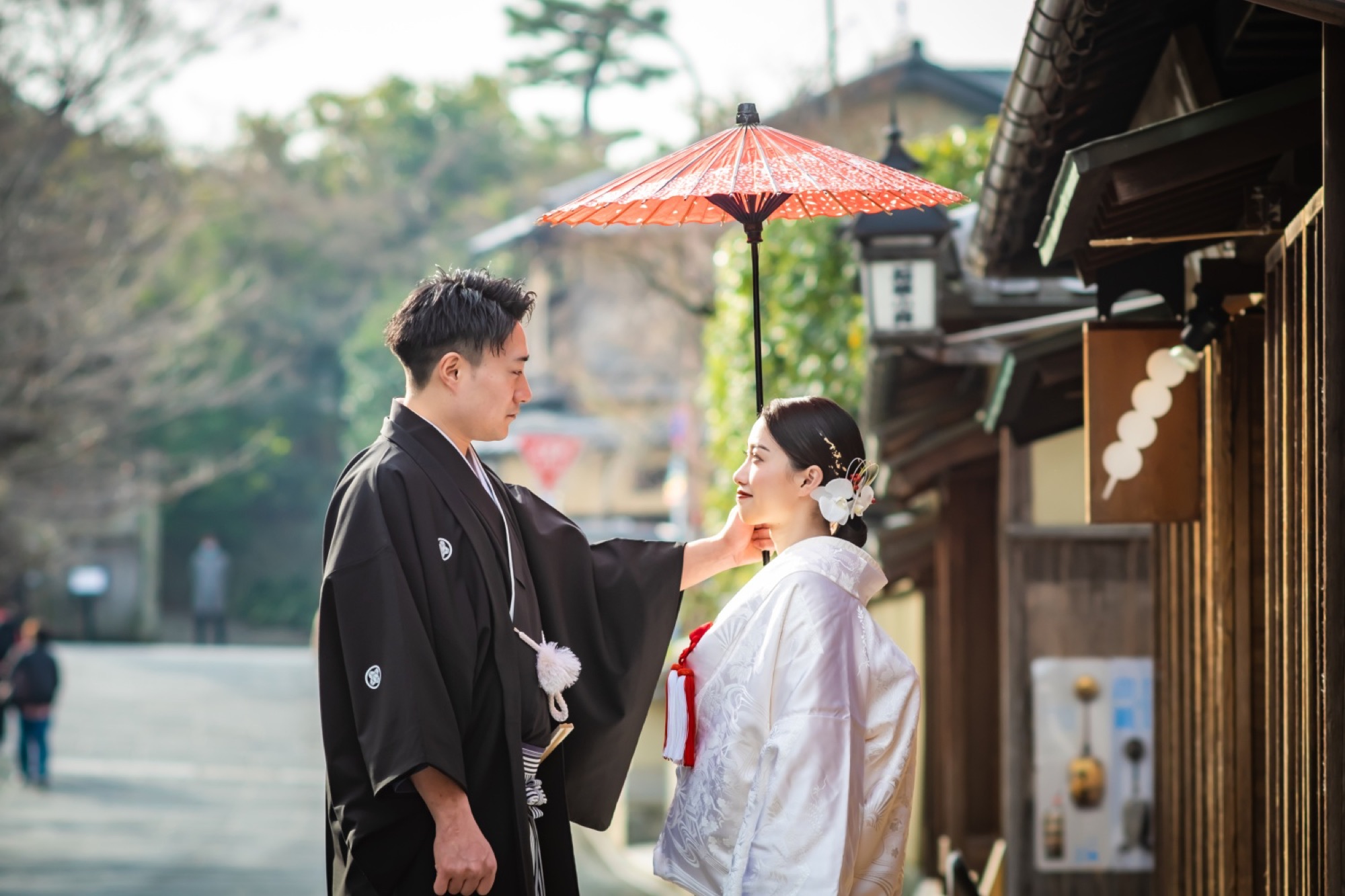
| Shiromuku | Bride | An all-white formal kimono, white from the outer robe to the inner layers | Purity, and a bride ready to take on the colors of her new family |
| Wataboshi | Bride | A large white hood worn with the shiromuku | Traditionally said to keep the bride’s face hidden from others until the ceremony |
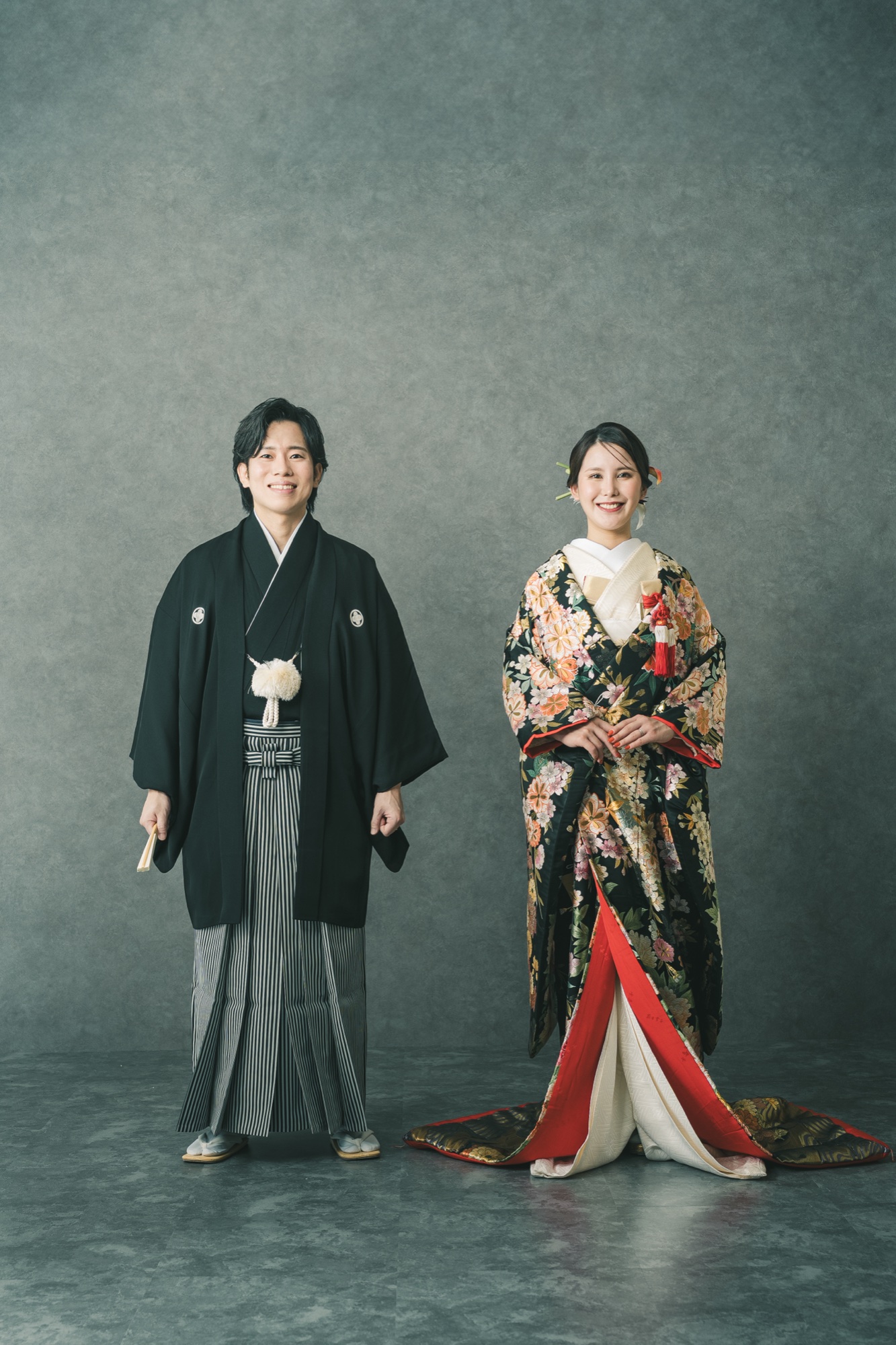
| Iro-uchikake | Bride | A colorful outer robe, often red or gold, woven or embroidered with lucky motifs such as cranes and flowers | Celebration and good fortune; traditionally often worn after the ceremony |
| Hiki-furisode | Bride | A long-sleeved kimono with a trailing hem | A youthful, elegant formal look |
| Montsuki haori hakama | Groom | A black kimono and jacket with family crests (mon), worn with striped pleated trousers (hakama) | The most formal attire for a Japanese man |
Shiromuku and wataboshi: the classic white look
The shiromuku is the image many people picture when they think of a Japanese bride. It is quiet, pure and very formal. Paired with the white wataboshi hood, it feels like a scene from an old Kyoto wedding procession. Under the kimono, the bride wears tabi, which are white split-toe socks worn with traditional sandals.
Iro-uchikake and montsuki: color and formality
If you want bold color, the iro-uchikake is the choice. Its rich patterns stand out against plain studio walls, wooden temple halls and Kyoto’s autumn leaves. Next to it, the groom’s black montsuki with crests gives a strong, balanced contrast.
Can couples from abroad wear these kimono for photos in Kyoto?
Yes. You do not need to be Japanese or to be holding a ceremony in Japan. Wearing a bridal kimono for photos is a respectful way to experience Japanese wedding culture. A wedding kimono has many layers and ties, so professional dressing is needed. At Pure, our team handles kimono dressing for both of you, plus bridal hair and makeup.
- You choose one bridal kimono per kimono outfit: shiromuku, iro-uchikake or hiki-furisode.
- The groom wears a black montsuki.
- Your outfits are chosen and reserved at a consultation before the day. If you want to change on the day, you can ask the staff.
- If you would like a wataboshi or other traditional accessories, please ask us when you contact us.
For more on choosing between styles, see our kimono wedding photos guide for Kyoto.
How much does it cost? Kimono plans from ¥121,000
Here are Pure’s plans that include traditional kimono. All prices are tax included. Location costs may differ depending on the location, and shoots on weekends and Japanese national holidays add ¥33,000 (tax included).
| Plan | Price (tax included) | Photos | Time | Where |
|---|---|---|---|---|
| Kimono Studio Plan | ¥121,000 | 150+ | 3 hours | Pure Nijo Castle Studio, Kyoto |
| Kyoto Townhouse (Kyo-machiya) with Garden Plan | ¥154,000 | 150+ | 5 hours | A Kyo-machiya studio in Kyoto; location fee and admission included |
| Kimono Location Plan | ¥154,000 | 150+ | 5 hours | Locations in and around Kyoto |
| Kimono 2-Outfit Studio Plan | ¥187,000 | 250+ | 5 hours | Pure Nijo Castle Studio, Kyoto |
| Kimono & Dress Studio Plan | ¥220,000 | 250+ | 4.5 hours | Pure studio, Kyoto |
See all plans and prices in English on our English page for international guests.
Planning wedding photos in Kyoto?
Tell us your travel dates and the photos you have in mind. Our staff will reply by email.
Studio, townhouse or temple: which setting suits you?
A studio is calm and works in any weather. A Kyoto townhouse, or kyo-machiya, has wooden verandas and a garden that feel like old Kyoto. Location shoots take you out into the city.
Locations available include Bishamondo, Daikakuji, Sennyuji, Zuishin-in, Manpukuji, Toyokuni Shrine, Konkai Komyoji, Shinsen-en, Maruyama Park, Arashiyama, Gion Shirakawa, the Ninenzaka and Nene-no-michi area of Higashiyama, the Keage Incline, the Kamo River and Takaragaike, among others.
Planning for autumn and winter in Kyoto
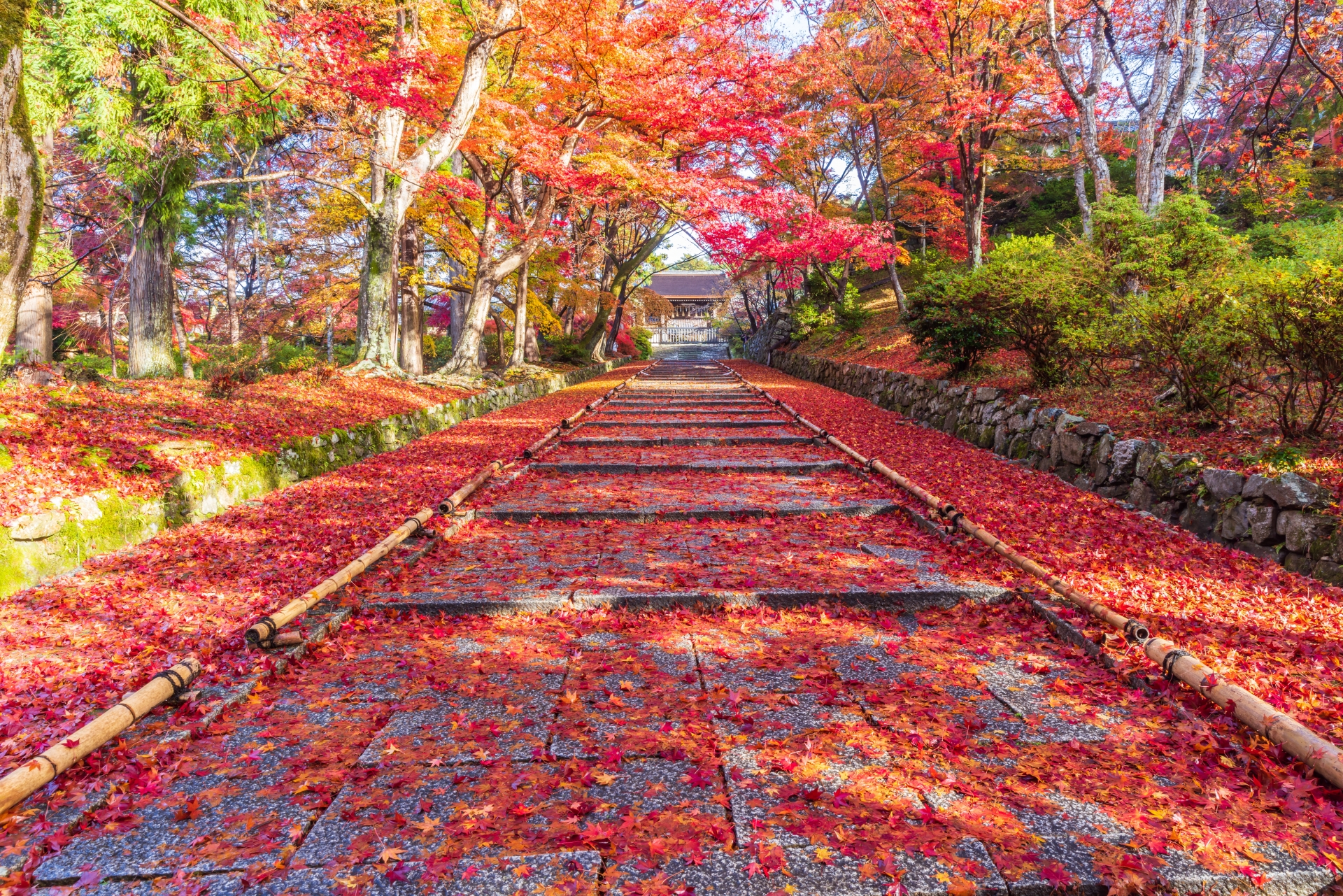
In Kyoto, the maples usually turn red in late autumn, and the timing changes from year to year. The deep reds suit both the white shiromuku and a colorful iro-uchikake. Winter brings quiet streets and crisp air. Read more in our Kyoto autumn wedding photos guide.
Small etiquette tips at temples and old streets
- Temples and shrines are places of worship. Keep voices low and follow the photographer’s lead.
- On narrow streets such as Ninenzaka, step aside so other visitors can pass.
- Walk slowly in kimono and traditional sandals. Short steps are easier and look graceful in photos.
How does a photo day fit into your Kyoto itinerary?
Plan one day for your shoot. Here is a typical location day from Pure’s website.
| Time | What happens |
|---|---|
| 10:00 | The bride arrives at Pure and checks her outfit. Dressing, makeup and hair begin. You may also come together. |
| 11:00 | The groom arrives and gets ready. |
| 11:30 | Move to the location and prepare. |
| 12:00 | Shooting begins, following your plan. |
| 15:00 | Back at Pure: change into your own clothes, a light hair set, and payment of any balance. |
You will still have the late afternoon and evening open for dinner or a walk in Higashiyama.
What to bring
Please bring tabi socks, a kimono undergarment and towels. If that is difficult while traveling, Pure can prepare them for a fee; please tell the staff in advance. Makeup products are generally provided by the salon, but you are welcome to bring your own if you prefer. Our kimono photo checklist (in Japanese) lists more ideas.
Yes. You can send an inquiry through our contact form, which accepts messages in English, or book an online consultation. We will help you choose a plan and outfits before your trip.
Yes, family members are welcome to attend the shoot. Please let us know when you contact us.
The Kimono 2-Outfit Studio Plan is ¥187,000 (tax included) for 250+ photos in about 5 hours, with two kimono outfits. For the combination you have in mind, please ask us when you contact us.
Yes. The Kimono & Dress Studio Plan is ¥220,000 (tax included) for 250+ photos in about 4.5 hours, and there are also plans that combine studio and location shoots.
Please ask us when you contact us.
Please ask us when you contact us. Autumn is a popular season in Kyoto, so it helps to reach out once your travel dates are set.
Ready to wear a shiromuku or iro-uchikake in Kyoto? Send us your travel dates and the style you have in mind through our English contact form, and we will help you plan your day.
Planning wedding photos in Kyoto?
Tell us your travel dates and the photos you have in mind. Our staff will reply by email.
© Beauty Salon Pure
