京都・東山「ウェスティン都ホテル」内の和装・洋装ブライダル撮影、前撮り・フォトウェディングサロン

2026.11.11
Kyoto Winter Wedding Photos: Arashiyama & Kimono from ¥154,000
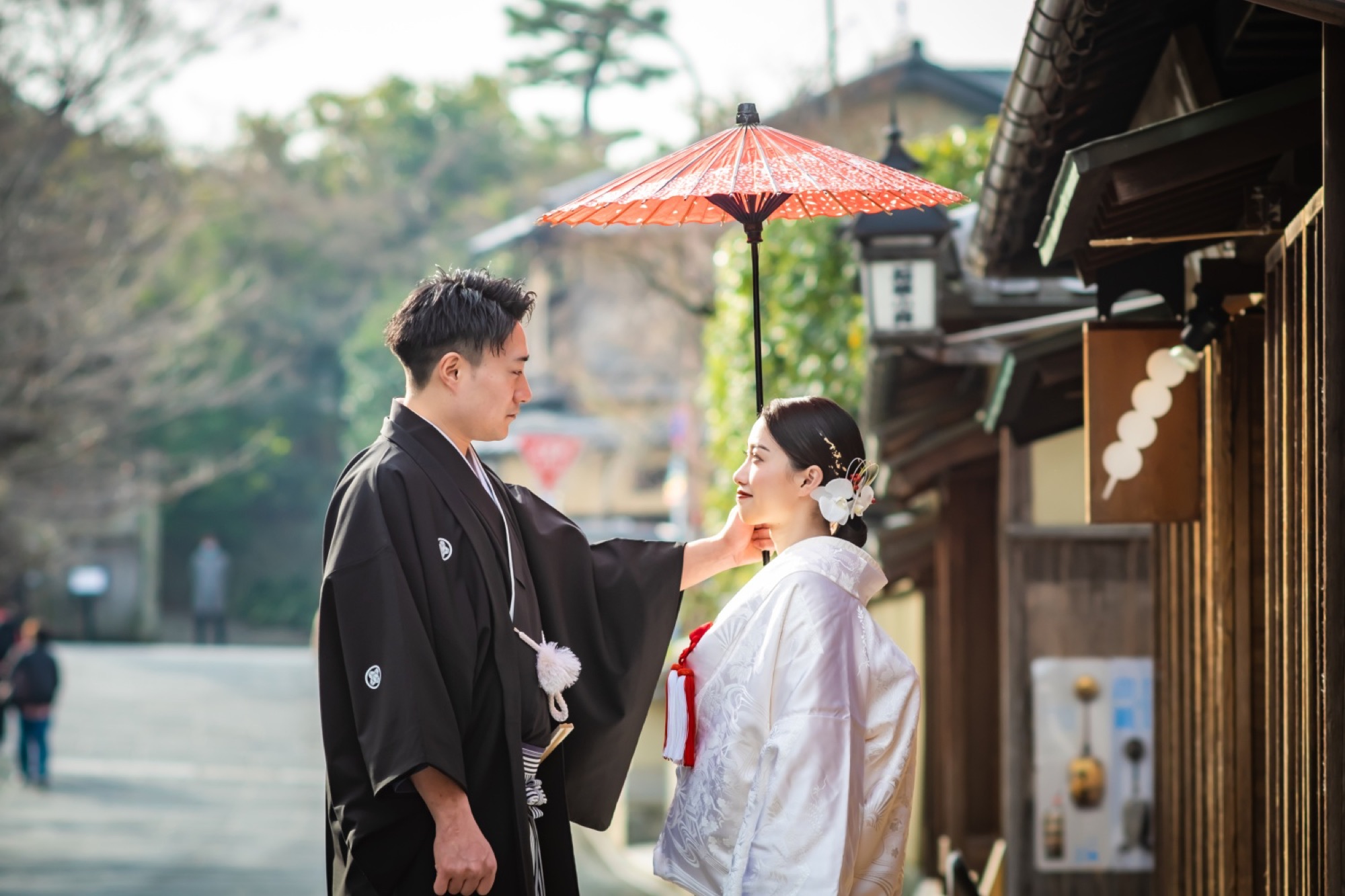
This guide is for couples planning a trip to Kyoto this winter who want wedding photos in kimono or a wedding dress. You will learn what winter in Kyoto feels like for a photo day, how realistic snow is, how to stay warm in kimono, why Arashiyama works well in winter, and what Bridal Salon Pure’s plans cost.
Quick answer
- Winter in Kyoto usually runs from about December to February. Many visitors find it calmer than the busy autumn and spring seasons, and the cold, dry air often gives clear, crisp light.
- Snow is never certain. It depends entirely on the weather on your day, so plan for a beautiful winter scene with or without snow.
- A location day at Pure runs about 5 hours, from 10:00 to around 15:00. The Kimono Location Plan is ¥154,000 (tax included) with 150 or more photos. Costs may differ depending on the location.
- Arashiyama, with Togetsukyo Bridge and the mountains behind it, is one of Pure’s location options and suits winter kimono photos well.
- Weekend and Japanese national holiday shoots add ¥33,000 (tax included). You can start with an online consultation or an English inquiry from abroad.
Why choose winter for wedding photos in Kyoto?
Autumn leaves and cherry blossoms bring large crowds to Kyoto. Winter is often said to be a quieter time to visit, which can make it easier to take photos on old streets and riverbanks without many people in the frame.
- Clear air: cold, dry days often bring sharp light and blue skies, so colors in a kimono stand out.
- Calm scenery: bare trees, still water and distant mountains give a simple, elegant background.
- A festive mood: in Japan, the New Year is traditionally the most important holiday of the year, and red and gold are often seen as celebratory colors. A bright iro-uchikake fits that feeling.
- A chance of snow: on some days the hills or rooftops turn white. This depends only on the weather, so treat it as a bonus, not a plan.
If you would like to compare winter with the other seasons, our English page for international couples lists every plan and price in English.
Arashiyama in winter: what kind of photos can you take?

Arashiyama is on the western side of Kyoto. Its best-known view is Togetsukyo Bridge stretching over the river, with wooded mountains rising behind it. In winter the mountains turn soft brown and grey, and on a snowy day they can turn white. A couple in shiromuku and montsuki stands out clearly against this calm scene.
You can see real photos from Pure’s shoots there on our Arashiyama wedding photos page in English, and more in our Arashiyama photo gallery (the text is in Japanese, but the photos speak for themselves).
Small etiquette tips for Arashiyama and temples
- Arashiyama is a public sightseeing area. Leave room on paths and the bridge for other visitors.
- At temples and shrines, people come to pray. Keep your voice low and follow your photographer’s guidance on where to stand.
- Do not step into roped-off or closed areas, even for a better angle.
Which kimono to wear in winter: shiromuku or iro-uchikake?
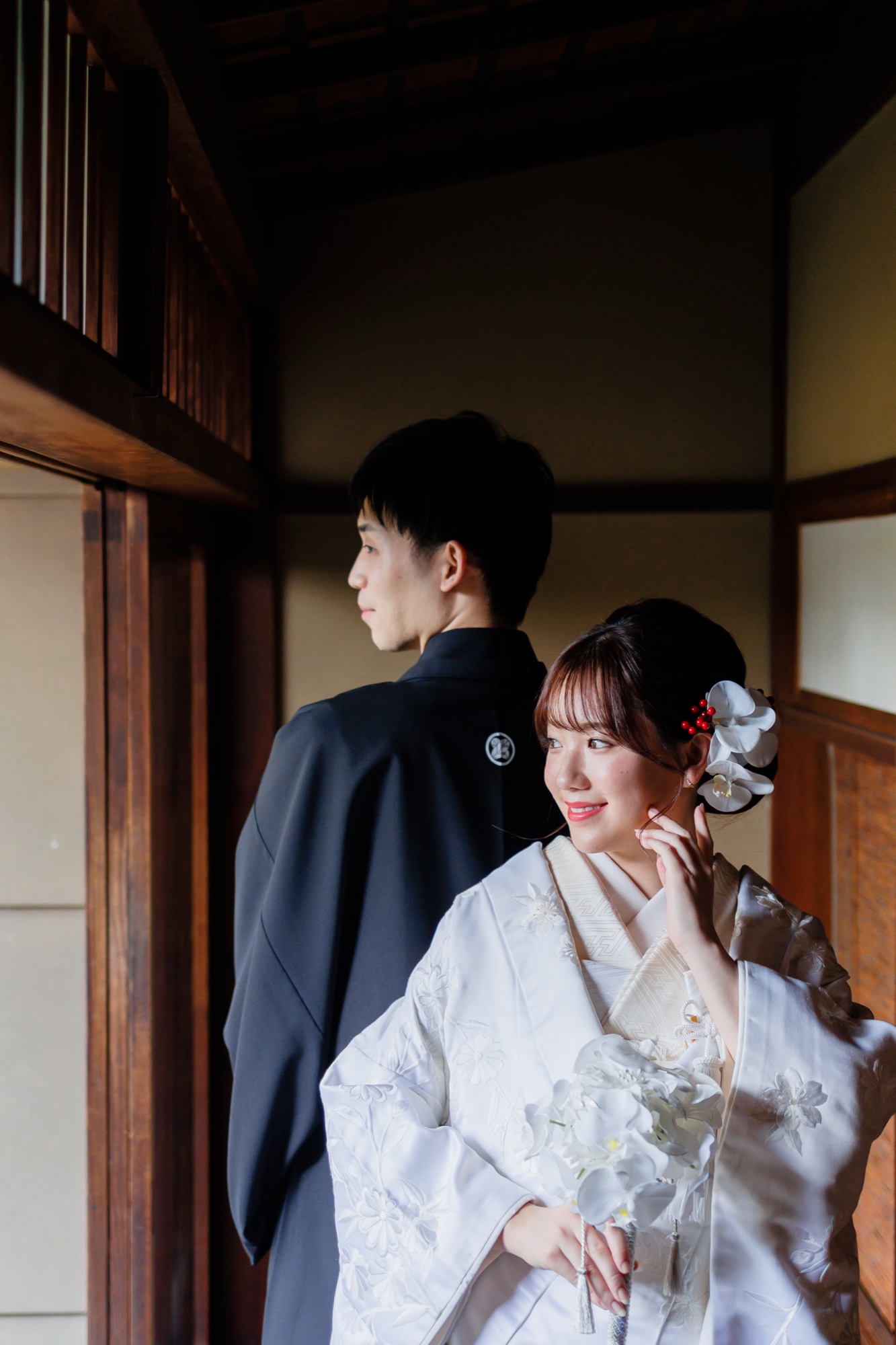
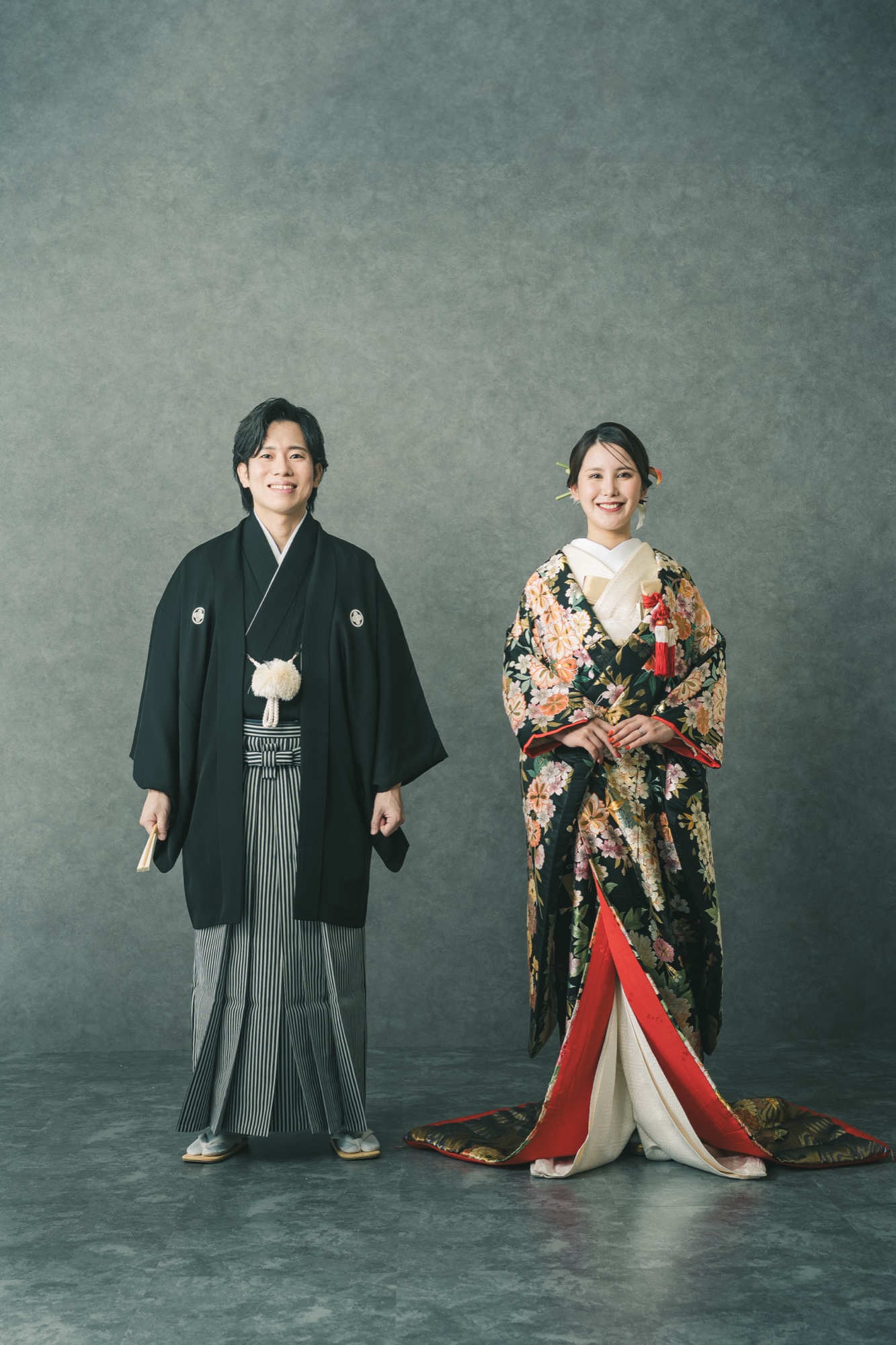
A shiromuku is the all-white bridal kimono. White is traditionally said to represent purity and a new beginning. It is often worn with a wataboshi, a white hood that covers the bride’s hair. An iro-uchikake is a colorful, richly patterned outer robe, traditionally worn in many weddings after the white kimono. The groom wears montsuki: a black kimono with family crests, worn with hakama trousers.
- Shiromuku in winter: gives a quiet, pure look that matches snow or pale winter skies.
- Iro-uchikake in winter: red, gold and bright patterns add warmth to a bare winter landscape.
- Wedding dress: also possible on location. Pure offers dresses through its partnership with Ayumi Bridal, a popular Kyoto dress shop.
Planning wedding photos in Kyoto?
Tell us your travel dates and the photos you have in mind. Our staff will reply by email.
How do you stay warm in kimono on a winter shoot?
A bridal kimono is made of several layers, so the body is better covered than many people expect. Hands, feet and neck feel the cold most. A few simple steps help a lot.
| Item | Why it helps in winter |
|---|---|
| Tabi (split-toe socks worn with kimono) | Bring your own, or Pure can prepare them for a fee. Please ask staff in advance. |
| Kimono undergarments and towels | Towels are used to shape the kimono. Bring your own or ask Pure to prepare them for a fee. |
| A warm coat | Wear it while moving and between shots, then take it off for photos. |
| Your own makeup (optional) | Pure prepares makeup, but bring your own if you prefer certain products. |
For the full list, see our 12-item checklist of what to bring to a kimono photoshoot.
How much do winter wedding photos cost? Plans from ¥121,000
All prices are from Pure’s current plans. Location costs may differ depending on the location. Weekend and Japanese national holiday shoots add ¥33,000 (tax included).
| Plan | Price (tax included) | Photos | Time |
|---|---|---|---|
| Kimono Location Plan | ¥154,000 | 150 or more | 5 hours |
| Wedding Dress Location Plan | ¥154,000 | 150 or more | 5 hours |
| Kimono & Dress Location Plan | ¥253,000 | 250 or more | 5 hours |
| Kyoto Townhouse (Kyo-machiya) with Garden Plan | ¥154,000 | 150 or more | 5 hours |
| Kimono Studio Plan | ¥121,000 | 150 or more | 3 hours |
The Kimono Location Plan includes kimono dressing for both of you, a shiromuku, iro-uchikake or hiki-furisode (a long-sleeved bridal kimono with a trailing hem) for the bride, a black montsuki for the groom, a head accessory, hair and makeup for the bride, and accessories. The townhouse plan also includes the location fee and entrance fee. On a very cold day, an indoor studio or townhouse plan is a calm alternative to a riverside shoot.
How does a winter photo day fit into a Kyoto trip?
Pure is inside The Westin Miyako Kyoto in Higashiyama. A typical location day looks like this:
- 10:00: The bride arrives at Pure, checks the outfit, and starts dressing, makeup and hair.
- 11:00: The groom arrives and gets ready.
- 11:30: Travel to the location and prepare.
- 12:00: The shoot begins, moving between spots according to your plan.
- 15:00: Back at Pure, change into your own clothes, light hair styling, and payment if needed.
Your evening is open for dinner or a winter walk. Family members are welcome to watch. For more detail, read our hour-by-hour photoshoot schedule. To start planning, book an online consultation or send an inquiry in English through our contact form.
No one can promise snow. It depends entirely on the weather on your day. Clear winter days still give crisp, beautiful light for kimono photos.
Please ask us when you contact us.
Yes. Pure offers online consultations, consultations on LINE, and a contact form that you can send in English.
Yes. Shoots on weekends and Japanese national holidays add ¥33,000 (tax included). Location costs may also differ depending on the location.
Please ask us when you contact us. It helps to share your travel dates and preferred location early.
Yes, family members are welcome to attend the shoot.
Planning wedding photos in Kyoto?
Tell us your travel dates and the photos you have in mind. Our staff will reply by email.
© Beauty Salon Pure
