京都・東山「ウェスティン都ホテル」内の和装・洋装ブライダル撮影、前撮り・フォトウェディングサロン

2026.11.19
Gion Kyoto Kimono Photos: Red Umbrellas, Timing & Plans ¥154,000
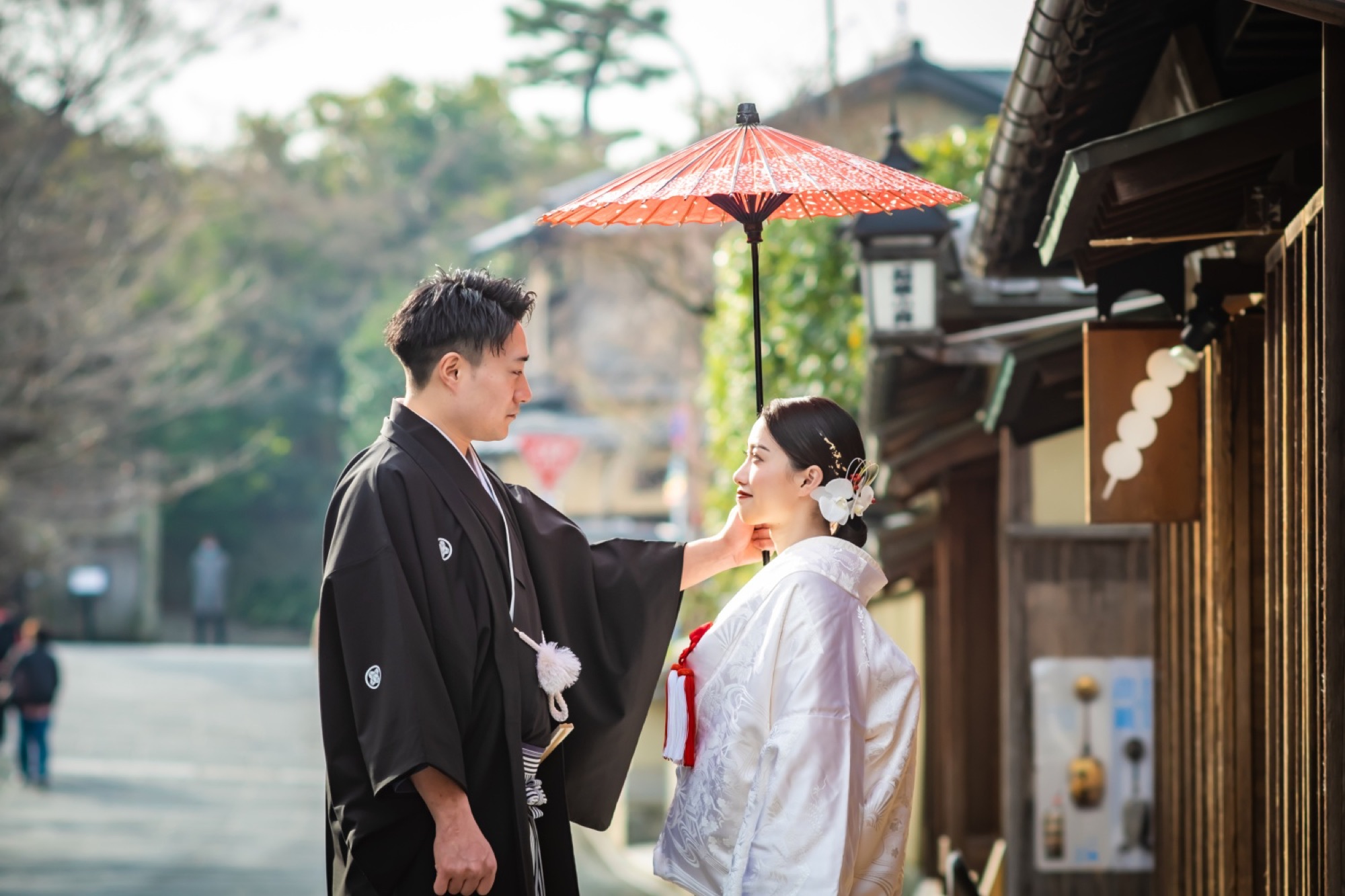
This guide is for couples traveling to Kyoto who want wedding photos in kimono on the city’s historic streets. You will learn what Gion Shirakawa and Higashiyama (Nene-no-michi and Ninenzaka) look like in photos, how red umbrella shots work, how to think about timing and crowds, and what a photo day with Bridal Salon Pure costs and includes. Pure is a bridal photo salon inside The Westin Miyako Kyoto in Higashiyama.
Quick answer
- Pure photographs kimono couples at Gion Shirakawa and in Higashiyama around Nene-no-michi and Ninenzaka. Both are on Pure’s list of location shooting areas.
- The Kimono Location Plan costs ¥154,000 (tax included) for 150+ photos over about 5 hours. Location costs may differ depending on the location.
- A typical day runs from 10:00 to 15:00. Preparation starts at the salon, the move to the location is around 11:30, and shooting starts around 12:00.
- Weekend and Japanese national holiday shoots have a ¥33,000 (tax included) surcharge. Weekdays are also usually calmer on these busy streets.
- You can plan everything from abroad. Send an inquiry through the contact form, which accepts messages in English.
Gion Shirakawa or Higashiyama: which street suits your kimono photos?
Both areas show the Kyoto that many travelers picture: stone paving, wooden townhouses and quiet lanes. They feel different in photos, though, and many couples choose based on the mood they want.
| Gion Shirakawa | Higashiyama (Nene-no-michi, Ninenzaka) | |
|---|---|---|
| Look in photos | Stone paving, a small canal and townhouse facades | Stone-paved slopes, old shops and views toward Yasaka Pagoda |
| Mood | Calm and intimate | Classic old-Kyoto atmosphere with steps and slopes |
| Suits | Shiromuku and soft-colored iro-uchikake | Red umbrellas and bright iro-uchikake |
| See real shoots | Gion Shirakawa photo gallery | Higashiyama photo gallery |
The gallery pages show real Pure shoots at each place. The text on them is in Japanese, but the photos speak for themselves. For seasons, prices and FAQs in English, see our Gion Shirakawa wedding photos page and Higashiyama wedding photos page.

What kimono do couples wear, and what do the styles mean?
A Japanese wedding kimono is more than a costume. Each style carries a traditional meaning, which is part of why couples choose to wear one in Kyoto.
- Shiromuku: an all-white bridal kimono. White is traditionally said to express purity and a new beginning. It is often worn with a wataboshi, a white hood that covers the bride’s hair.
- Iro-uchikake: a colorful, richly patterned outer robe worn over the kimono. Reds and golds look especially vivid against old wooden streets.
- Hiki-furisode: a long-sleeved kimono with a trailing hem, a style that feels light and elegant.
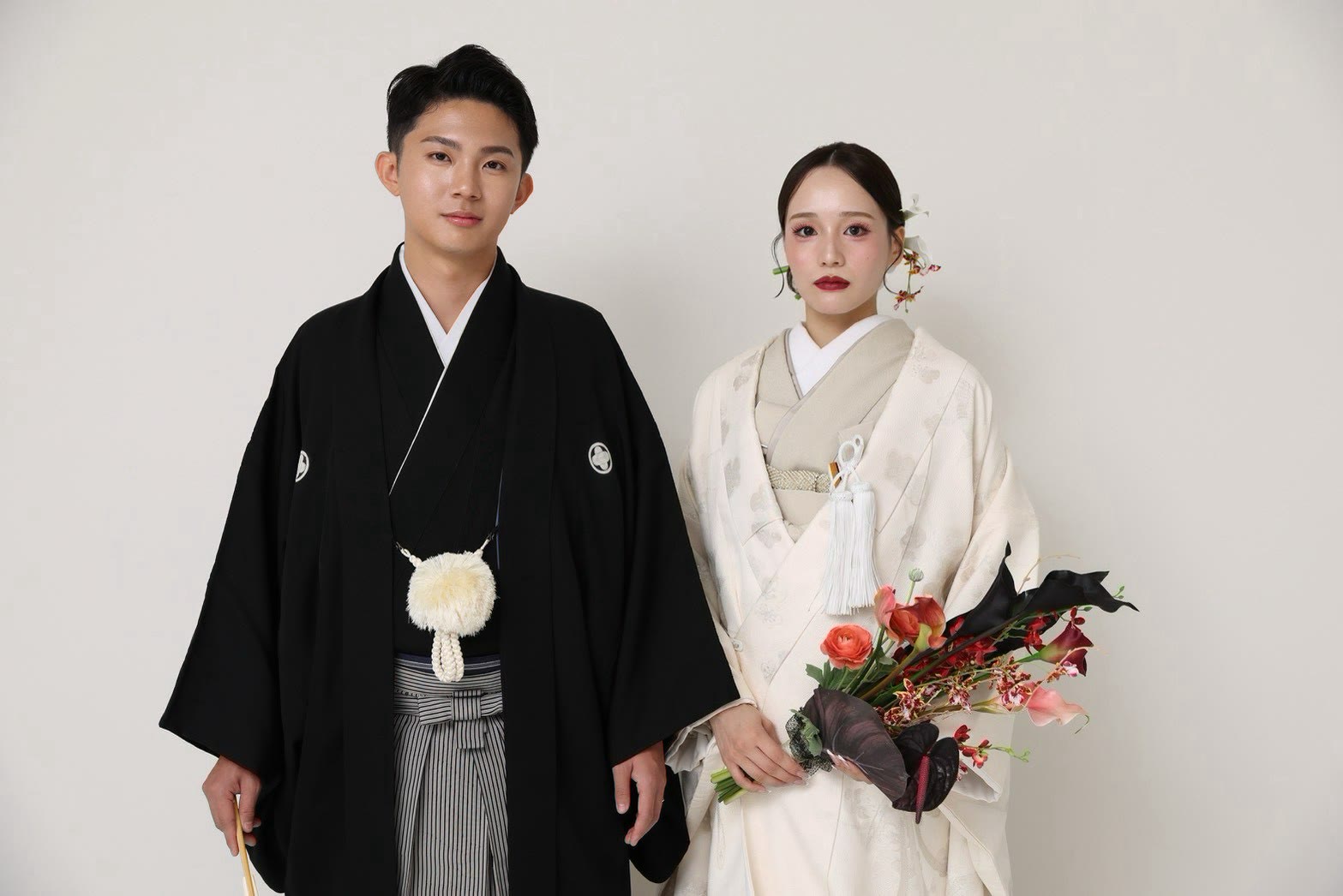
- Montsuki: the groom’s formal black kimono with family crests, worn with hakama (pleated trousers).
The Kimono Location Plan lets the bride choose a shiromuku, an iro-uchikake or a hiki-furisode, and includes the groom’s black montsuki. If you would like a wataboshi, please ask us when you contact us.
How much do kimono photos in Gion cost? Plans from ¥154,000
All prices below are tax included. Location costs may differ depending on the location, and weekend or national holiday shoots add ¥33,000 (tax included).
| Plan | Price | Photos | Time | Notes |
|---|---|---|---|---|
| Kimono Location Plan | ¥154,000 (tax included) | 150+ | About 5 hours | Kimono for both, bride’s hair and makeup, head accessories |
| Dress Studio & Kimono Location Plan | ¥231,000 (tax included) | 250+ | About 6 hours | Wedding dress in the studio, kimono on location |
| Kimono & Dress Location Plan | ¥253,000 (tax included) | 250+ | About 5 hours | Kimono and dress on location, all-cut data included |
You can compare every plan in English on our English page for overseas guests.
Planning wedding photos in Kyoto?
Tell us your travel dates and the photos you have in mind. Our staff will reply by email.
When is the best time for red umbrella photos and fewer crowds?
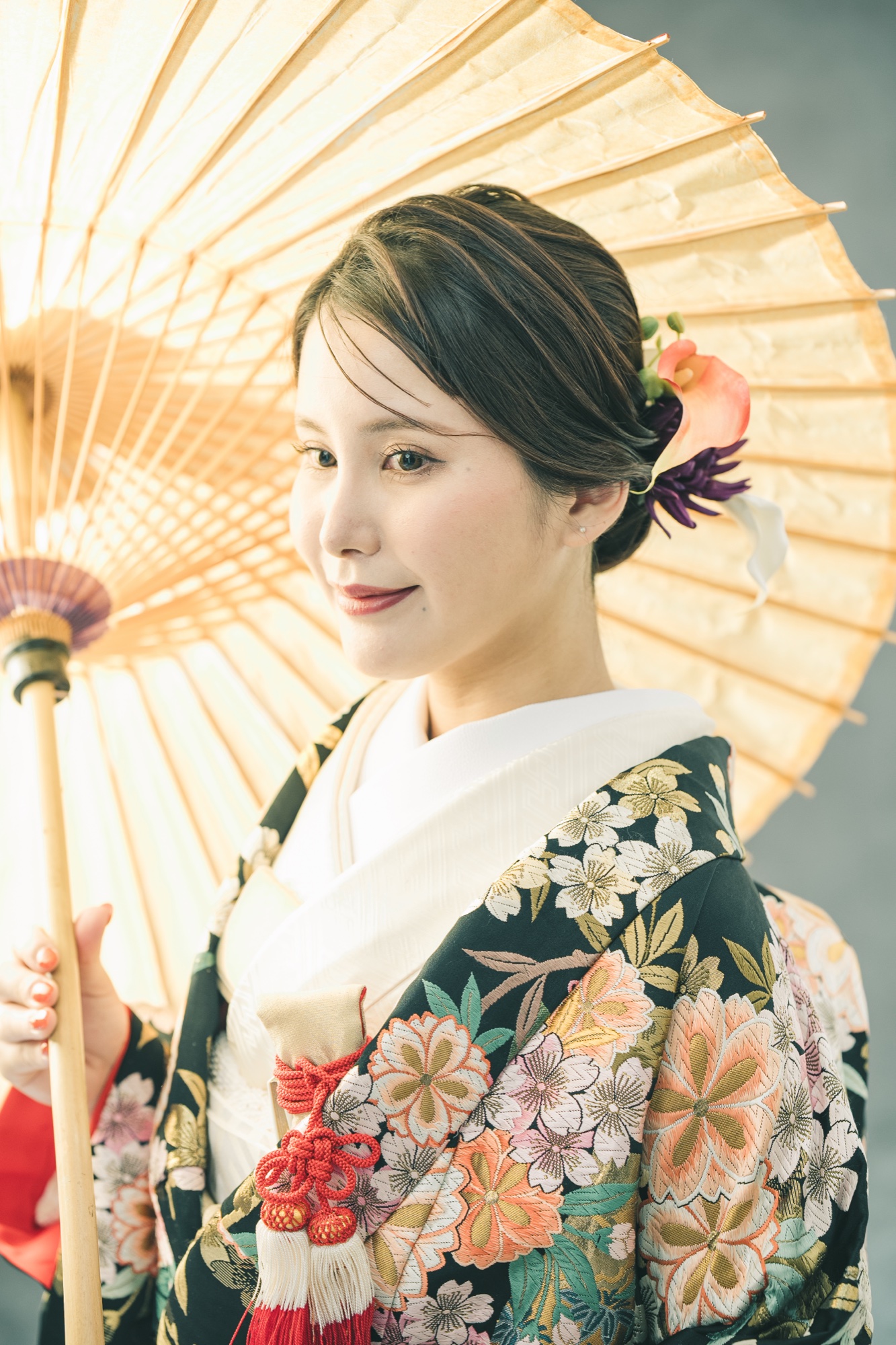
A red Japanese umbrella against stone paving is one of the most loved looks on these streets. The color stands out against dark wood and grey stone, and it frames the couple well in both shiromuku and iro-uchikake. Umbrella shots also work in the studio, as in the photo below. Please ask us about the umbrella and other props when you contact us.
Time of day
On Pure’s example schedule, shooting starts around 12:00 after preparation at the salon. Gion and Higashiyama are popular sightseeing areas, so some people around you are normal. Shooting is done while choosing spots along your plan. If you have a hope about timing, please ask us when you contact us.
Season
| Season | What to expect |
|---|---|
| Autumn (now) | Autumn leaves color in late autumn, and the timing changes each year. Popular and busy. |
| Winter | Usually quieter streets and clear air. Warm layers matter in kimono. |
| Spring | Cherry blossoms bloom in spring, and the timing changes each year. Very popular, so contact us early. |
Etiquette on the old streets
- These are living neighborhoods. Keep paths clear for residents and shops.
- Follow posted signs; some lanes in Gion are private and should not be entered.
- Do not photograph geiko or maiko, or other passersby, without their consent.
- Keep voices low and follow your photographer’s guidance at each spot.
How does a photo day fit into your Kyoto trip?
A location day usually takes about 5 hours, so it is a good idea to keep that day light and plan sightseeing for the evening or the next day.
- 10:00: The bride arrives at Pure, checks her kimono, and dressing, makeup and hair begin.
- 11:00: The groom arrives and gets ready.
- 11:30: Move to the location and prepare.
- 12:00: Shooting starts, choosing spots along the plan.
- 15:00: Back at Pure, change into your own clothes with a light hair set, settle any payment, and finish.
What to bring: tabi (split-toe socks worn with kimono), undergarments and towels. You may bring your own, or Pure can prepare them for a fee if you ask in advance. Makeup is provided by the salon, but you may bring your own if you prefer. Family members are welcome to watch.
Yes. Send an inquiry through our contact form, which accepts messages in English. Online consultations are also available.
The Kimono Location Plan takes about 5 hours, usually from 10:00 to 15:00. That includes dressing, hair and makeup, the move to the location and shooting.
Please bring tabi, undergarments and towels, or ask us in advance to prepare them for a fee. Makeup is provided by the salon.
Please ask us when you contact us.
Yes. Weekend and Japanese national holiday shoots have a ¥33,000 (tax included) surcharge. Location costs may also differ depending on the location.
If Gion’s stone streets or Ninenzaka’s slopes are where you picture your kimono photos, tell us your travel dates and the look you want. Send a message through our contact form in English, and we will help you plan the day.
Planning wedding photos in Kyoto?
Tell us your travel dates and the photos you have in mind. Our staff will reply by email.

© Beauty Salon Pure
