京都・東山「ウェスティン都ホテル」内の和装・洋装ブライダル撮影、前撮り・フォトウェディングサロン

2026.11.01
Kyoto Temple Photo Etiquette: A Wedding Photo Guide for Autumn
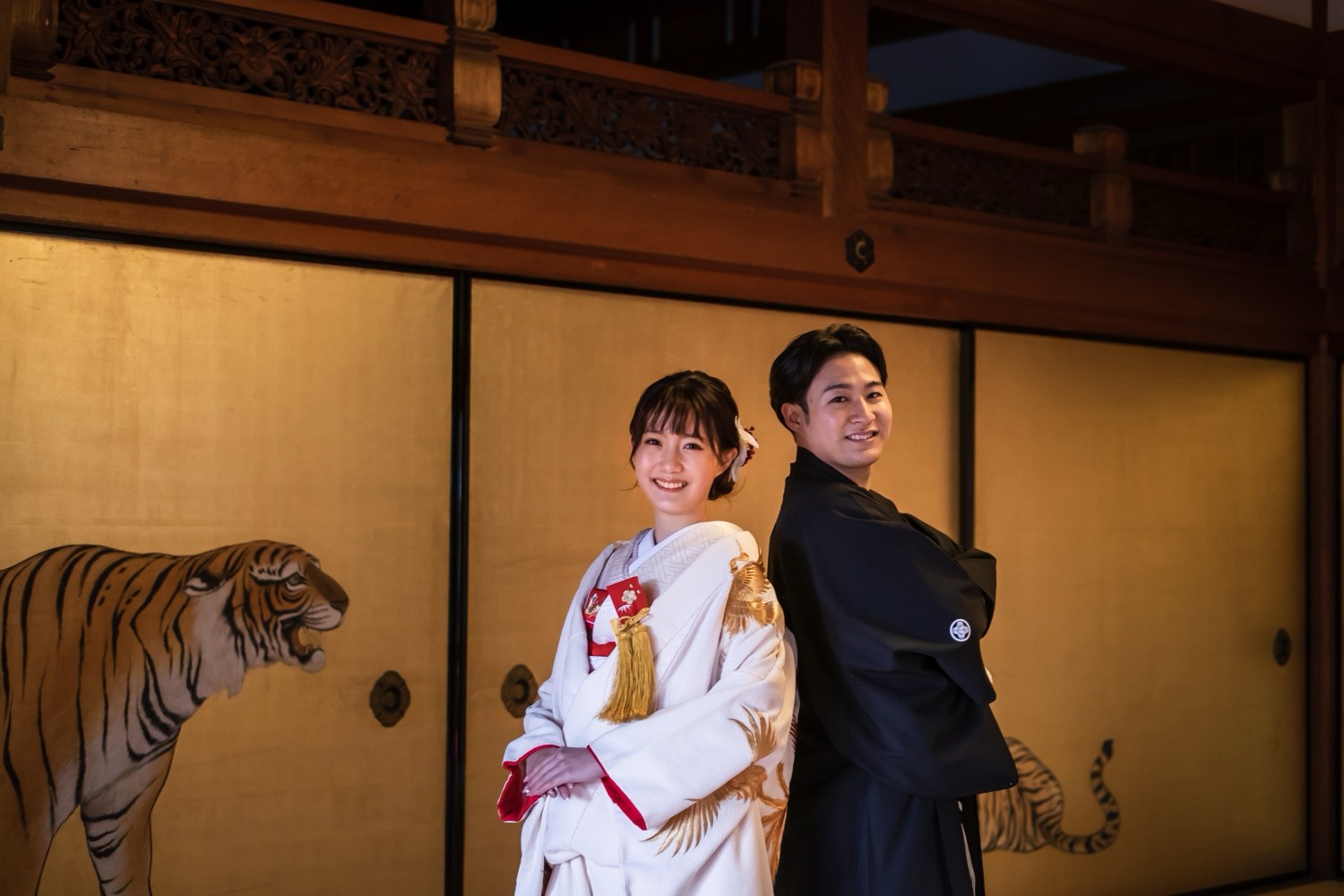
This guide is for couples who are visiting Kyoto and want wedding photos in kimono or a wedding dress at a temple or on an old street. It covers basic Kyoto temple photo etiquette, how to deal with crowds, why quieter times of day help, and how a local team like Bridal Salon Pure, inside The Westin Miyako Kyoto in Higashiyama, runs a location shoot.
Quick answer
- Treat temples as places of worship first: keep voices low, stay on paths, follow every sign about photography, and never block worshippers or other visitors.
- Choose a designated location. Pure photographs at designated locations, including Bishamondo and Konkai Komyoji. Places you pick yourself may need permission in advance, and you would arrange that yourself.
- Popular spots are usually calmer earlier in the day and on weekdays. Weekend and national holiday shoots also cost an extra ¥33,000 (tax included).
- Pure’s Kimono Location Plan costs ¥154,000 (tax included) for 150+ photos over about 5 hours. Location fees may differ depending on the location.
- Bring your own tabi (split-toe socks), undergarments and towels, or ask us to prepare them for a fee.
What is basic Kyoto temple photo etiquette?
Kyoto’s temples are not film sets. People come to them to pray, and many are active religious sites. The general etiquette is simple and widely shared across Japan:
| Do | Avoid |
|---|---|
| Bow lightly at the gate as you enter, as many visitors traditionally do | Running, shouting or playing loud music in the grounds |
| Follow signs. Photography is often not allowed inside halls | Photographing inside a hall or a Buddhist statue where signs ask you not to |
| Stay on stone paths and step aside for worshippers | Walking on moss, raked gravel or roped-off areas |
| Keep bags and props close and tidy | Sitting or leaning on lanterns, fences or temple buildings |
| Wait your turn at popular viewpoints | Asking strangers to move so you can get a clear shot |
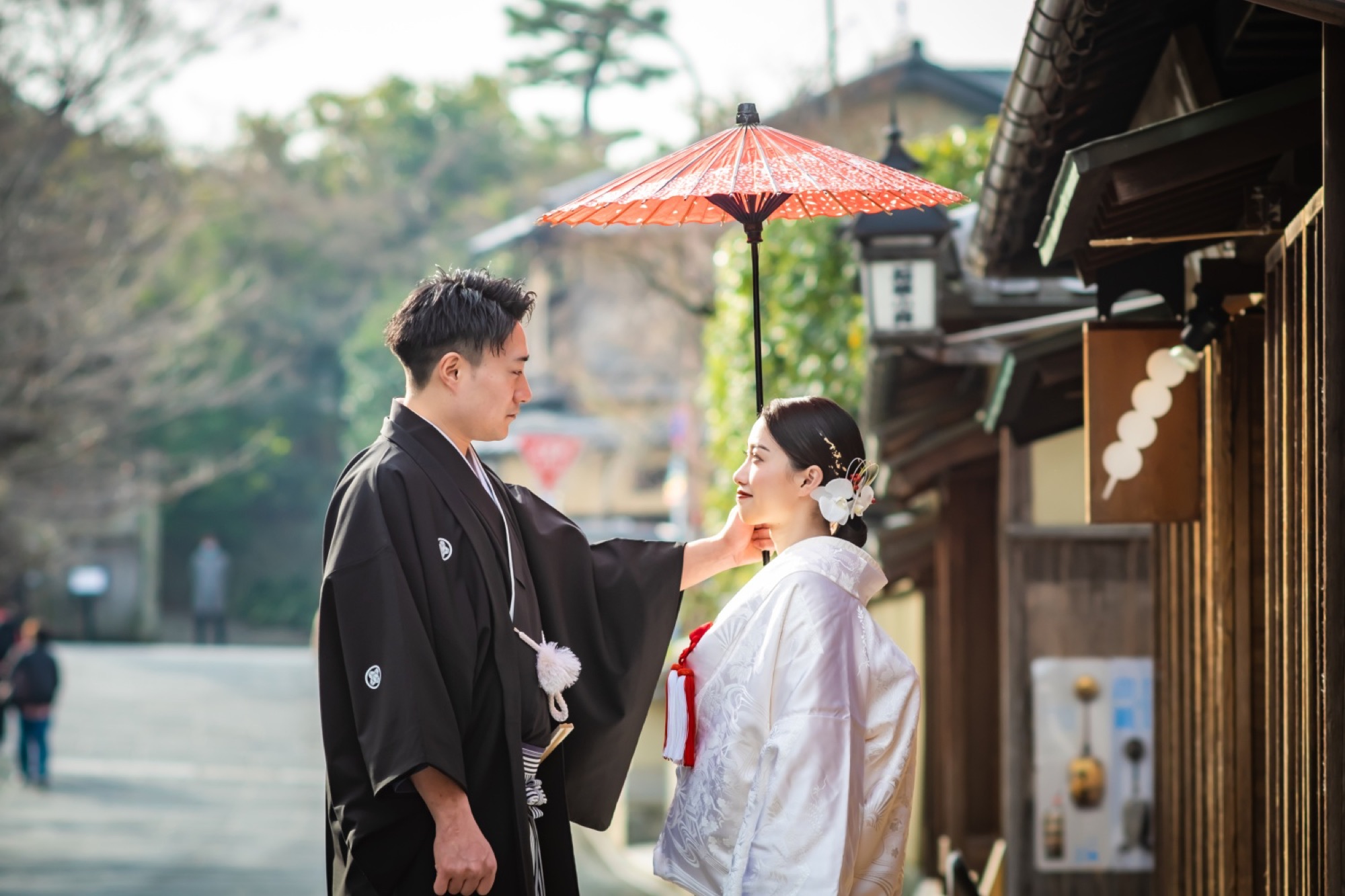
On old streets such as the stone-paved lanes of Higashiyama or Gion, remember that many buildings are private homes and shops. Do not step into doorways or gardens, and do not photograph local residents without asking.

How do Bishamondo and Konkai Komyoji feel in autumn and winter?
If you are planning an autumn trip, the timing of the red maple leaves changes from year to year, so check the latest reports closer to your travel dates. Autumn is also when temples are most crowded, so etiquette matters even more.
Bishamondo
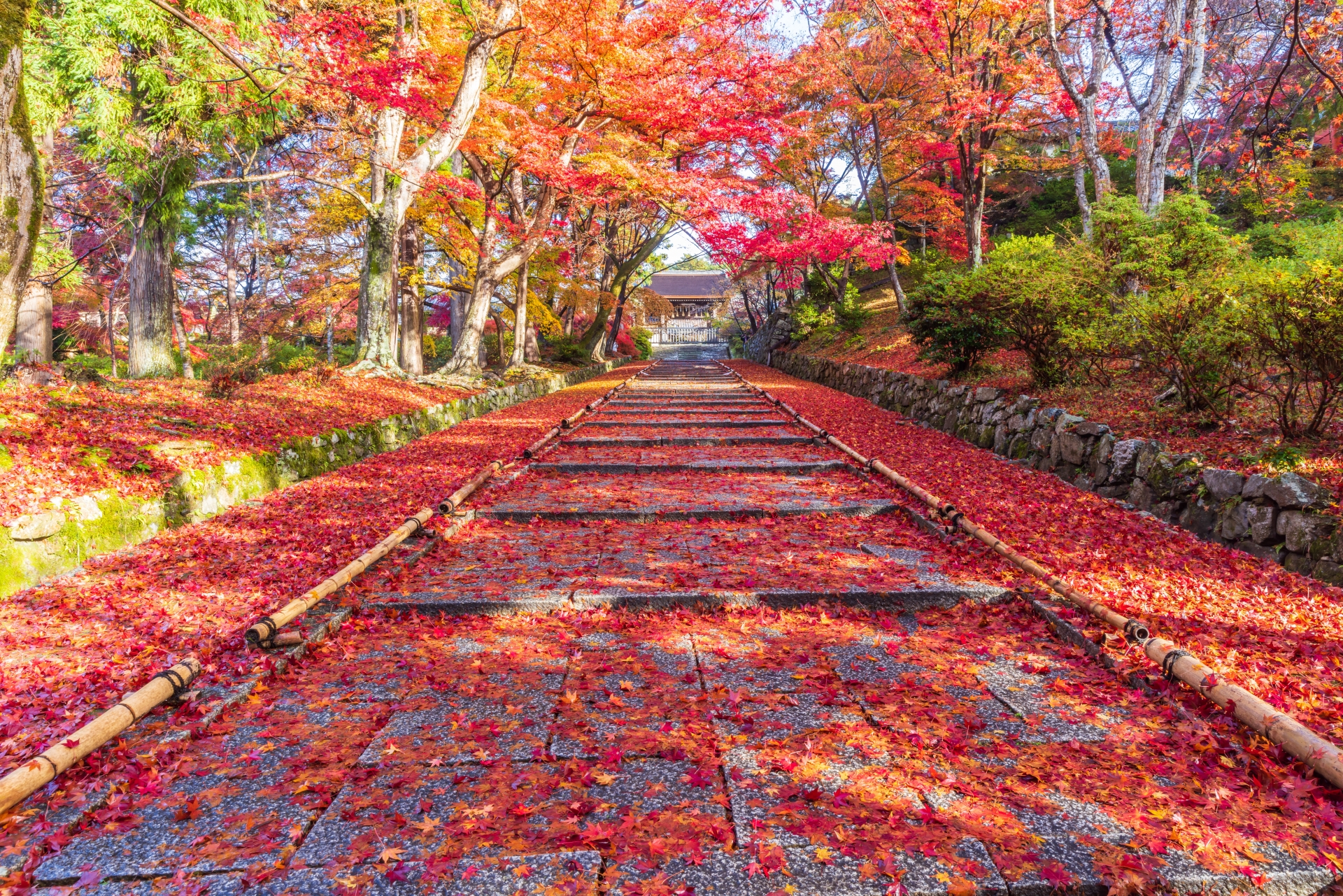
In autumn, the stone steps at Bishamondo are often covered with fallen red leaves, a look Japanese people call shiki-momiji, or a carpet of leaves. Walk slowly on the steps. In kimono you take smaller steps, and the photographer can help you find spots where you are not in anyone’s way. Read more in our Japanese article on Bishamondo wedding photos and autumn leaves (in Japanese).
Konkai Komyoji
Konkai Komyoji is one of our designated locations, and it suits both a white shiromuku and a colorful iro-uchikake in autumn and in winter. See real shoots in our Konkai Komyoji wedding photos page.
For more about the autumn season and other red-leaf locations, see Kyoto Autumn Wedding Photos.
Planning wedding photos in Kyoto?
Tell us your travel dates and the photos you have in mind. Our staff will reply by email.
Why do quieter hours and weekdays help?
Kyoto’s famous spots fill up as the day goes on, especially in autumn. Fewer people means fewer strangers in the background, less waiting at each viewpoint, and less pressure on you and on other visitors. It also gives you time to walk slowly in kimono and enjoy the place.
- Weekdays are usually calmer than weekends, and they avoid the weekend and national holiday surcharge of ¥33,000 (tax included).
- Pure’s example location schedule starts preparation at 10:00, with shooting from about 12:00 and finishing around 15:00. If you hope for a different time of day, please ask us when you contact us.
- A shoot day fits well into a Kyoto itinerary. Plan sightseeing on the other days and avoid booking anything else on the photo day.
What do the kimono styles mean?
Knowing what you wear helps you feel at home in a temple setting.
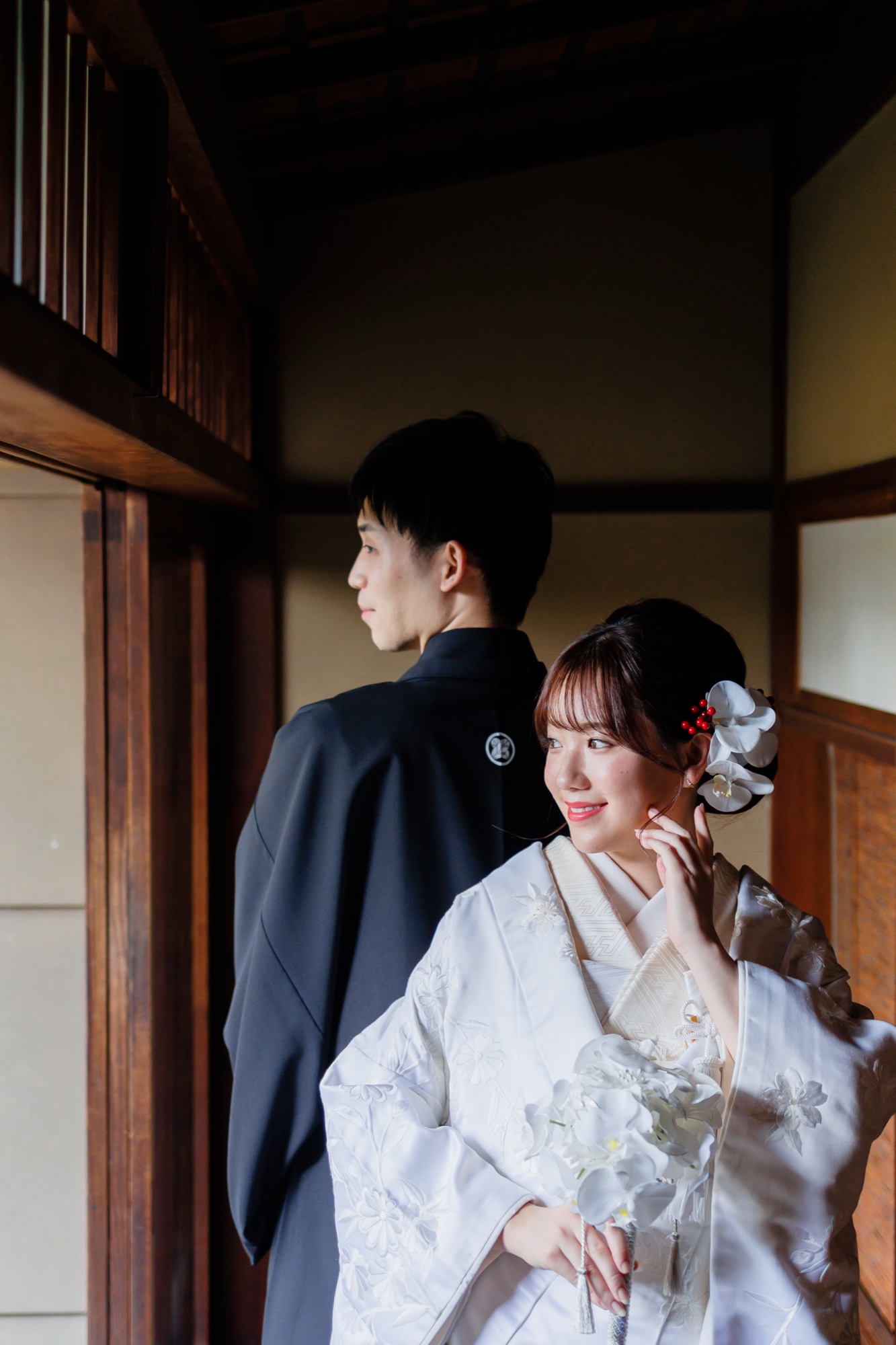
- Shiromuku: an all-white bridal kimono. White is often said to stand for purity and a fresh start in a new family.
- Wataboshi: a white hood traditionally worn with shiromuku.
- Iro-uchikake: a colorful bridal overcoat, often with patterns of cranes, flowers or other lucky motifs.
- Montsuki: the groom’s formal black kimono with family crests, worn with hakama trousers.
- Tabi: worn with traditional sandals.
How does Pure handle a temple location shoot? Plans from ¥154,000
You get ready at the salon. The bride arrives first at 10:00 for dressing, makeup and hair, and the groom joins at 11:00. We move to the location at about 11:30, check the site, and start shooting around 12:00. Afterward you return to Pure, change back into your own clothes and get a light hair touch-up. Your family is welcome to watch.
| Plan | Price (tax included) | Photos | Time |
|---|---|---|---|
| Kimono Location Plan | ¥154,000 | 150+ | 5 hours |
| Wedding Dress Studio & Kimono Location Plan | ¥231,000 | 250+ | 6 hours |
| Kimono & Dress Location Plan (all-cut data included) | ¥253,000 | 250+ | 5 hours |
Location costs may differ depending on the location. We shoot at our designated locations. If you want to bring props to a temple, please confirm when you book. A single photographer runs the shoot, so you will need to look after your own items. Full English prices are on our English page, and you can send questions in English through our contact form.
Most couples apply about 1 to 2 months before their shoot date. You can request a booking as soon as one week ahead, but in busy seasons a photographer may not be available, so booking early is safer. You can book up to 180 days ahead.
If rain or a storm is forecast, you can postpone at no charge up to 2 days before the shoot. We accept messages about this from 2 days before. If you still want to shoot and the photographer judges it possible, we can shoot using umbrellas.
Photos are uploaded to an online viewing site about 2 to 3 weeks after the shoot. We email you the URL and login ID, and you can view and download the JPEG files.
We can shoot at our designated locations. Some places you choose, such as shrines, parks or public facilities, may need permission in advance, and you would check and apply for that yourself. Please ask us when you contact us.
Please bring tabi, undergarments and towels, or we can prepare them for a fee if you tell our staff in advance. Makeup is provided, but you may bring your own if you prefer.
Planning wedding photos in Kyoto?
Tell us your travel dates and the photos you have in mind. Our staff will reply by email.
© Beauty Salon Pure
